If you want one free AI course that issues a real certificate at no cost, start with Harvard's CS50's Introduction to Artificial Intelligence with Python — it is the most rigorous, most respected free option here, and the CS50 Certificate is free once you pass. This guide is for self-learners, students, and career-switchers who want credible AI training without paying, and who care that the certificate is actually free rather than a paid upsell. Every course below is genuinely free AND issues a certificate at no charge, drawn from our independent reviews of 200+ AI courses. We rank them, name one real strength and one honest caveat for each, and tell you who each one is and isn't for. Be warned up front: most free certificates are completion badges, not accredited credentials — useful for learning and LinkedIn, not a substitute for a degree.
How we picked
These picks come from our own independent reviews of 200+ AI courses, where we read the real syllabus, run or inspect the actual lessons, and weigh public learner feedback (ratings, review counts, and forum threads) rather than marketing copy. For this guide we applied one hard filter: the course must be free to take AND issue a certificate or badge at no cost. We deliberately excluded courses where the certificate is paywalled even when the lessons are free, and we flag any 2026 transitions (such as exam retirements) so you don't plan around outdated information. Where a provider's own claim could not be verified against a primary source, we soften or omit it rather than repeat it.
Two honest notes on "free certificate." First, several strong courses were left off because their certificate costs money even though the content is free — for example, the popular Elements of AI is free to study, but its formal certificate is a paid/ECTS option, so it didn't meet our zero-cost-certificate bar. Second, edX-hosted courses usually charge for the verified edX certificate; where we recommend one (CS50 AI), it's because the provider issues a separate free certificate outside edX.
The best free AI courses with certificates
1. CS50's Introduction to Artificial Intelligence with Python — Harvard / edX
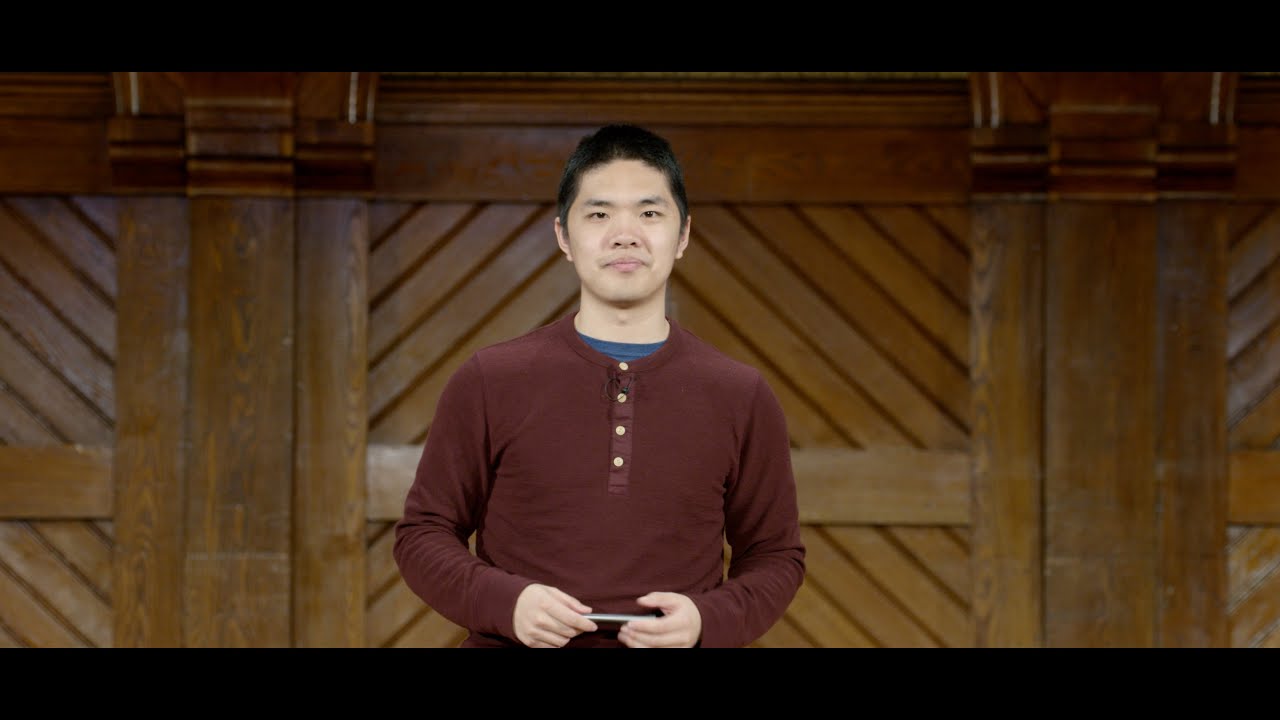
This is the strongest free-with-certificate pick for anyone who can already write basic Python and wants real depth, not just vocabulary. It covers the foundations of modern AI — search, knowledge and uncertainty, optimization, and machine learning including neural networks — through hands-on Python projects, and it carries a 4.8 rating across roughly 4,500 reviews with 300K+ learners. The standout strength is rigor and credibility: it's a genuine Harvard course, and you earn a free CS50 Certificate by scoring at least 70% on the projects and quizzes (the separate edX verified certificate is the paid one, so claim the free CS50 Certificate instead). The honest caveat: it is demanding and time-intensive — plan for several weeks of real effort — and it assumes comfort with Python, so it is not a gentle non-technical primer. It's free and beginner-level in branding but intermediate in workload. Read our full CS50's Introduction to AI review, then start with CS50's Introduction to Artificial Intelligence with Python.
2. Intro to Machine Learning — Kaggle
If you want the fastest path to building a real model and walking away with a free certificate, this is it. Kaggle's roughly 3-hour, 7-lesson micro-course gets absolute beginners building working scikit-learn models in browser notebooks the same afternoon — load data with Pandas, build a decision tree, validate it, understand under/overfitting, then move to random forests. Its real strength is being completely free (certificate included), zero-setup, and code-first: reviewers consistently call it one of the best practical starting points. The honest caveat is that it's deliberately shallow — no math and no algorithm internals, so models are treated as black boxes, and the certificate is an informal, auto-issued one that carries little weight with employers. It's free and beginner-level, but it's a launchpad, not a complete ML education. Start with Intro to Machine Learning, then continue your machine learning study with deeper material.
3. Introduction to Generative AI Learning Path — Google Cloud
This is the best free, plain-English on-ramp to generative AI for non-technical learners who want the vocabulary before going deeper. The flagship 22-minute "Introduction to Generative AI" video anchors the path and holds a verified 4.7/5 from 12,217 ratings (1.6M+ enrollments on its Coursera mirror), explaining what generative AI and LLMs are, how they differ from traditional ML, and Google's responsible-AI principles. Its strength is that it's free, well-produced, concise, and issues a shareable completion badge. The honest caveat, echoed by many reviewers, is that it's heavily Google-centric — the closing minutes read like a sales pitch — with almost no hands-on coding, so it's awareness training rather than a build-something course. It's free and beginner-level, and most valuable if you're new to the topic or heading into Google's ecosystem. Start with Introduction to Generative AI Learning Path and explore more generative AI courses next.
4. Azure AI Fundamentals — Microsoft Learn
Pick this free, self-paced Microsoft Learn path if you want structured AI literacy mapped to a recognizable Microsoft credential. The refreshed path is well-structured and authoritative — published by Microsoft, updated in 2026 — covering generative AI and agents, text and speech analysis, and computer vision on Azure, with a free practice assessment to gauge readiness. The honest caveats are real and worth planning around: the content is conceptual awareness training, not hands-on engineering (it teaches you to recognize and discuss Azure AI services, not build production systems), and the companion AI-900 exam retires June 30, 2026 and is replaced by AI-901, so cert-seekers should target AI-901 rather than the deprecated AI-900 path. The learning path itself is genuinely free and beginner-level, though the refresh now assumes a little Python. Start with Azure AI Fundamentals.
5. Intro to Deep Learning — Kaggle
This is the lowest-friction way to write your first working neural network and earn a free certificate. Authored by Ryan Holbrook, the roughly 4-hour, 6-lesson course teaches you to build, train, and regularize fully-connected neural networks for structured (tabular) data using Keras on TensorFlow — all in a zero-setup browser notebook, with hints and full solutions for every exercise. Its strength is being free, fast, and fully hands-on from lesson one. The honest caveat is scope: it's a narrow primer on dense networks for tabular data that skips the math and never touches CNNs, RNNs, transformers, or PyTorch, and it explicitly assumes you've already done an intro-ML course first. It's free and beginner-level, but only after you have basic ML under your belt. Take Intro to Machine Learning first, then Intro to Deep Learning, and browse more neural networks courses to go deeper.
6. Ethics of AI — University of Helsinki
If you want a free, credential-bearing introduction to responsible AI for a general audience, this is the best pick. This self-paced, text-based MOOC from the University of Helsinki (hosted on mooc.fi) runs across seven chapters — non-maleficence, accountability, transparency, human rights, fairness, and AI ethics in practice — using readings, auto-graded quizzes, and peer-reviewed essays, with no final exam. Its strengths are academic credibility and a genuinely free downloadable certificate from your mooc.fi profile (with an optional paid 2 ECTS path), plus an international discussion forum reviewers single out as a highlight. The honest caveat: it's almost entirely non-technical and leans toward meta-ethics over actionable, code-level practice, so engineers wanting fairness/governance tooling will find it too philosophical. It's free and beginner-level for any curious professional. Start with Ethics of AI and explore more AI ethics courses.
7. Intro to AI Ethics — Kaggle
For practitioners who'd rather learn fairness by writing code than by reading philosophy, this free Kaggle micro-course is uniquely practical. Across five short lessons (roughly 2-4 hours) authored by Alexis Cook, you investigate a toxic-text classifier that wrongly flags an innocent sentence, train decision trees on credit-application data, and compare four formal fairness criteria — leaving able to name six bias types and apply them to a confusion matrix. Its strength is concreteness, with a shareable free completion certificate and no paywall. The honest caveat is narrow scope: it focuses on bias and fairness in classical ML and largely skips privacy, governance, regulation, and LLM-specific risks, and it assumes basic Python and pandas, so it's not for true non-coders. It's free and beginner-level for people who already write some Python. Take Intro to AI Ethics — and pair it with the conceptual breadth of Ethics of AI for fuller coverage.
8. Microsoft Copilot Foundations — Microsoft Learn
If you specifically want a free, vendor-official first step into building AI agents, this short Microsoft Learn path fits — but read the caveat before you start. Updated in 2026 and requiring no Microsoft 365 Copilot license, it centers on a single "Get started with Microsoft Copilot Studio" module: creating conversational agents, working with topics, adding generative answers, and testing and publishing — with a hands-on exercise and an official Microsoft Learn badge. Its strength is being free, current, and finishable in one sitting. The honest caveat is that, despite the name, it is not about using Copilot inside Word, Excel, or PowerPoint for everyday productivity — it's narrowly about building Copilot Studio agents, and it awards a completion badge rather than a graded certification. It's free and beginner-level for aspiring makers and developers. Start with Microsoft Copilot Foundations.
How to choose
Match the course to your goal, your coding comfort, and how much the certificate itself matters. Use this quick guide:
- Want the most credible free certificate and can code Python? Choose CS50's Introduction to Artificial Intelligence with Python for genuine depth and a respected Harvard name.
- Want to build a real model this afternoon with zero setup? Choose Intro to Machine Learning, then Intro to Deep Learning once you've finished it.
- Non-technical and just want to understand generative AI? Choose Introduction to Generative AI Learning Path for a fast, plain-English overview.
- Need a credential tied to a known vendor track? Choose Azure AI Fundamentals — but target the AI-901 exam, since AI-900 retires June 30, 2026.
- Care about responsible AI? Choose Ethics of AI for concepts and a free certificate, or Intro to AI Ethics if you want hands-on, code-based fairness practice.
- Want to build AI agents? Choose Microsoft Copilot Foundations for a short, official intro to Copilot Studio.
- Reality check: these certificates are completion badges, not accredited degrees — pair them with a portfolio project, since employers value what you can build far more than a free badge.
Not fussed about a certificate? See our Top 10 Free AI & ML Courses for the best free courses overall — including free picks from Anthropic, OpenAI, and Google.
Frequently Asked Questions
Are these AI certificates actually free?
Yes. Every course here issues a certificate or badge at no cost, which is the hard filter we applied. We deliberately excluded courses whose certificate is paywalled even when the lessons are free. Note that for CS50 AI, the free certificate comes from CS50 itself; the separate edX verified certificate still costs money.
Do free AI certificates help you get a job?
They help, but they aren't decisive. Most free certificates are completion badges, not accredited credentials, so treat them as proof you studied a topic rather than a qualification. They're strongest on LinkedIn or alongside a portfolio. Employers weigh what you can actually build far more heavily than any single free certificate.
Which free AI course is best for complete beginners?
For non-coders who want to understand AI, start with the Introduction to Generative AI Learning Path or Ethics of AI. If you know basic Python and want hands-on skills, Intro to Machine Learning gets you building a real model in about three hours.
Do I need to know how to code to earn these certificates?
It depends on the course. Generative AI Learning Path and Ethics of AI require no coding. CS50 AI, both Kaggle courses, and the hands-on parts of the Azure path assume at least basic Python. If you're a true non-coder, start with the conceptual courses and add a beginner Python course before the hands-on ones.
Is Azure AI Fundamentals (AI-900) still worth it in 2026?
The free learning path is still useful for Azure-specific AI literacy, but plan around the exam change. The AI-900 exam retires June 30, 2026 and is replaced by AI-901, and the legacy self-paced path is deprecated, so anyone pursuing the credential should target AI-901. The path teaches awareness, not hands-on engineering.