You can learn AI without spending a dollar. Stanford, MIT, Google, and fast.ai all publish full courses for free. But paid options on Coursera, Udemy, and DataCamp keep growing too, and they offer things free courses don't — graded assignments, certificates, structured timelines. So which path actually makes sense for you? The answer depends on your goals, your discipline level, and whether a certificate matters for the job you want. Here's an honest breakdown of what you get at each price point.
What You Actually Get for Free
Free AI courses have never been better. The quality gap between free and paid has shrunk dramatically since 2020. University courses from Stanford, MIT, and Harvard now post full lecture videos, slides, and even homework assignments online. Platforms like Kaggle Learn and fast.ai were built free-first, with no paywalled content at all.
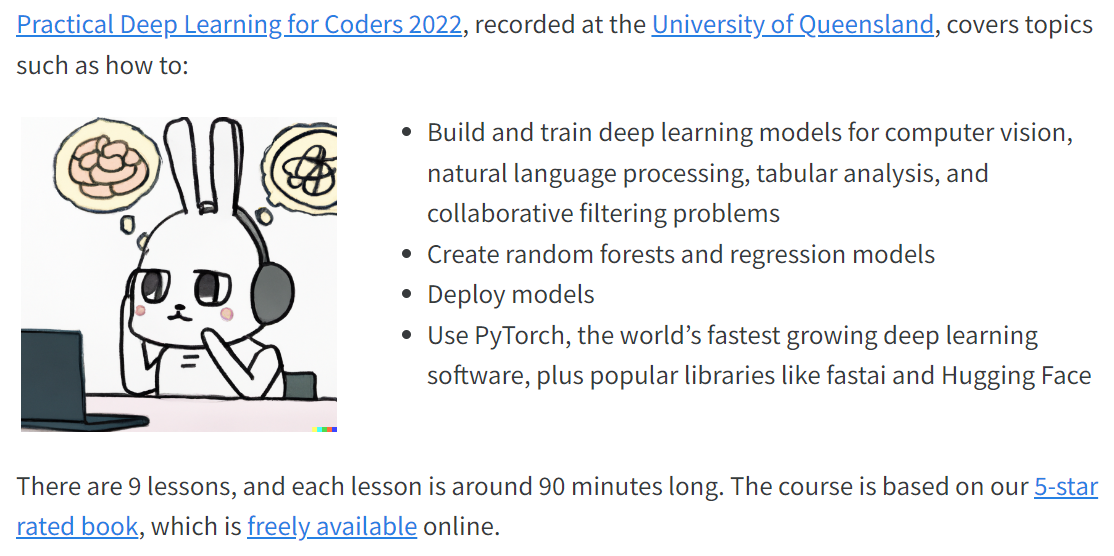
With free courses, you typically get full video lectures, reading materials, and sometimes coding exercises. Machine Learning Crash Course from Google includes interactive visualizations and exercises — all free. Practical Deep Learning for Coders by Jeremy Howard gives you a world-class deep learning education with notebooks, a textbook, and community forums at zero cost. CS50's Introduction to AI with Python from Harvard lets you submit assignments through their autograder for free.
The trade-offs with free courses are real, though. You won't get a verified certificate (or if you do, it's unverified). There's no deadlines pushing you forward. Support is community-based — forum posts instead of instructor office hours. And some free courses skip the structured projects that force you to actually apply what you learned.
Completion rates tell the story. Free online courses have notoriously low completion rates — often under 10%. Without financial commitment, it's easy to start strong and fade out by week three. If you're disciplined enough to finish what you start without external pressure, free courses can take you far. If you know you need deadlines and accountability, that self-awareness is worth paying for.
One underrated benefit of free courses: you can sample many before committing. Watch the first two lectures of five different courses, figure out which teaching style clicks, then go deep on that one. With paid courses, there's pressure to finish whatever you bought, even if it's not the right fit.
What Paid Courses Add
Paid courses justify their price through four main things: verified certificates, graded assignments with feedback, structured pacing, and sometimes mentorship or career support.
Certificates matter more than some people admit. If you're switching careers or don't have a CS degree, a certificate from Machine Learning Specialization on Coursera signals to hiring managers that you finished something real. It won't replace experience, but it gets past resume filters. The specialization costs $49/month and takes about 3 months — so roughly $150 total for three courses worth of graded work plus a certificate from Stanford Online and DeepLearning.AI.
Graded assignments are the other big differentiator. When you audit a Coursera course for free, you watch the videos but skip the labs. The labs are where learning actually sticks. Deep Learning Specialization has programming assignments where you implement neural networks from scratch, build CNNs, and train sequence models. Those assignments are worth the subscription alone.
DataCamp takes a different approach at $25/month with Machine Learning Scientist with Python. You get 93 hours of interactive content with in-browser coding exercises — no local setup needed. It's great if you want guided, bite-sized practice.
Structured pacing is the hidden value of paid courses. Coursera specializations give you weekly deadlines. DataCamp has daily streak tracking. These forcing functions sound trivial, but they solve the number-one problem with self-directed learning: actually finishing. If you've started and abandoned three free courses already, the structure of a paid option might be exactly what you need.
Some paid tiers also include peer interaction and mentorship. Udacity Nanodegrees pair you with mentors who review your code. Coursera's paid tier includes discussion forums that are more active than the free-audit versions. These human touchpoints can be valuable when you're stuck on a concept and need someone to explain it differently.
Side-by-Side Comparison
Here's what each price tier actually looks like in practice:
- Free: Full video lectures, community support, self-paced, no certificate (or unverified), no graded feedback. Examples: fast.ai, Kaggle Learn, MIT OCW, Stanford YouTube lectures.
- Freemium ($0 to audit, $49-79 to certify): Watch everything free, pay only for certificates and graded assignments. Examples: Coursera courses, edX courses, CS50.
- Subscription ($25-49/month): All content unlocked, ongoing access to multiple courses, certificates included. Examples: Coursera Plus, DataCamp, Udacity.
- One-time purchase ($10-20 on sale): Lifetime access to a single course, certificate of completion. Examples: Udemy courses like ML A-Z or Deep Learning A-Z.
- Premium ($200-2,000+): Mentorship, capstone projects, career services, employer-recognized certificates. Examples: Coursera Professional Certificates, Udacity Nanodegrees.
Best Free AI Courses Worth Your Time
Not all free courses are equal. Some are glorified YouTube playlists; others rival $2,000 bootcamps in quality. These are the ones that genuinely compete with (or beat) paid alternatives, based on content quality, practical exercises, and community support:
- Practical Deep Learning for Coders — Jeremy Howard's top-down approach is unlike anything else. You train state-of-the-art models in week one. Free forever, no catch. Best for: people who learn by doing.
- Machine Learning Crash Course — Google's 15-hour intro covers core ML concepts with interactive exercises. Perfect starting point if you have some Python knowledge. No fluff.
- CS50's Introduction to AI with Python — Brian Yu delivers a polished Harvard course with real programming projects. You build search algorithms, game-playing agents, and classifiers. Free to audit on edX.
- Introduction to Deep Learning — MIT's course taught by Alexander Amini. Updated yearly with current topics including generative models. Lab assignments use TensorFlow.
- Intro to Machine Learning — Kaggle's micro-course takes 3 hours and runs entirely in your browser. No setup, immediate hands-on practice with real datasets. Good for absolute beginners.
- Elements of AI — If you're non-technical and want to understand what AI is before deciding whether to learn it, this University of Helsinki course is the best starting point. Free certificate included.
- ChatGPT Prompt Engineering for Developers — A 1-hour free course by Isa Fulford and Andrew Ng. Practical and specific. Teaches you to use LLM APIs effectively.
- NLP Course — Hugging Face's course on using the Transformers library. Completely free, interactive, and practical. Best for anyone working with text data.
Best Paid AI Courses That Justify the Cost
These paid courses offer enough extra value — through structure, assignments, or certificates — to be worth your money:
- Machine Learning Specialization ($49/mo, ~3 months) — Andrew Ng's updated 2022 specialization on Coursera. Three courses covering regression through reinforcement learning. Graded labs use Python, NumPy, and TensorFlow. The certificate carries real weight on resumes.
- Deep Learning Specialization ($49/mo, ~5 months) — Five courses that take you from neural network basics to sequence models and attention. Programming assignments are the highlight — you implement backprop, build ResNets, and train LSTMs. Worth it for the assignments alone.
- Machine Learning A-Z (~$15 on sale) — Kirill Eremenko and Hadelin de Ponteves cover nearly every ML algorithm with both Python and R code. At Udemy sale prices, it's hard to argue against the value. Lifetime access.
- Machine Learning Scientist with Python ($25/mo) — DataCamp's career track gives you 93 hours of guided interactive exercises. Good for building consistent daily practice habits. The browser-based coding environment removes setup friction.
- Generative AI with Large Language Models ($49/mo, ~3 weeks) — DeepLearning.AI and AWS cover transformer architecture, fine-tuning, and RLHF. Short, focused, and current. Worth paying for if you want a certificate in GenAI specifically.
- Deep Learning A-Z (~$15 on sale) — Covers ANNs, CNNs, RNNs, and autoencoders with practical projects. Like ML A-Z, the sale price makes this a no-brainer purchase.
- TensorFlow Developer Certificate ($49/mo) — Four courses focused on building TensorFlow skills. Prepares you for Google's TensorFlow Developer Certificate exam. Practical and job-relevant.
The Hybrid Approach: Best of Both Worlds
The smartest strategy isn't purely free or purely paid. It's a deliberate mix that uses free resources for learning and paid resources for credentialing and accountability. Here's a concrete approach that balances cost and effectiveness:
Start free. Use Machine Learning Crash Course or Kaggle's Intro to ML to confirm you actually enjoy this work. Don't spend money until you've put in at least 20 hours of free learning and are sure you want to continue.
Go deep for free. Take Practical Deep Learning for Coders or watch Stanford's CS229 lectures. These are genuinely world-class, and free. You'll build real skills without paying anything.
Pay strategically. When you're ready for a credential, subscribe to Coursera for 2-3 months and finish a specialization. Cancel as soon as you're done. Or grab Udemy courses during sales for $10-15 each — keep them as lifetime references.
Build your portfolio for free. Kaggle competitions, GitHub projects, and open-source contributions cost nothing and impress employers more than certificates. The best resume line isn't a certificate — it's a project that solves a real problem.
Here's a concrete budget example: spend $0 for the first 2 months using Google's ML Crash Course and fast.ai. Then subscribe to Coursera for 3 months ($147) to complete the Machine Learning Specialization with a certificate. Grab 2-3 Udemy courses during a sale ($30-45) as permanent references. Total spend: under $200 for a year of serious AI education, one respected certificate, and multiple reference courses you own forever.
The worst approach? Buying every course that looks interesting. Course-hopping is the biggest trap in self-directed learning. Pick one path, finish it completely, build something with what you learned, then decide if you need another course. Most people don't need 10 courses — they need to finish 2 courses and build 3 projects.
Frequently Asked Questions
Frequently Asked Questions
Are free AI courses good enough to get a job?
Yes, but the courses alone won't get you hired. Free courses from fast.ai, Stanford, and MIT teach the same material as paid ones. What matters more is what you build with that knowledge. Employers care about projects, Kaggle competition results, and GitHub repos far more than which course you took. That said, if your resume has no CS degree, a paid certificate can help get past automated resume screens.
Do employers care about AI course certificates?
It depends on the employer. Large companies with automated resume screening often do filter for certifications. Startups and smaller companies tend to care more about demonstrated skills. Coursera certificates from well-known instructors (Andrew Ng, DeepLearning.AI) carry the most recognition. Udemy certificates carry almost none. If you need a certificate, invest in a Coursera specialization over a Udemy course.
Can I audit Coursera courses for free?
Yes. Most individual Coursera courses can be audited for free — you get access to video lectures and reading materials. You won't get graded assignments or a certificate. For specializations, you need to audit each course individually. Look for the 'Audit' link on the enrollment page (it's sometimes hidden behind the payment flow).
How much should I budget for AI courses?
You can learn AI for $0 using fast.ai, Kaggle, and university OCW. If you want certificates, budget $150-250 for a Coursera specialization (2-3 months at $49/month). Udemy courses cost $10-20 during frequent sales. DataCamp costs $25/month. For most learners, $200 total is enough to get one strong certificate and a couple of Udemy reference courses.
Is it worth paying for multiple certificates?
Usually not. One well-chosen certificate (like the Machine Learning Specialization or Deep Learning Specialization) plus strong portfolio projects is better than five certificates and no projects. Each additional certificate has diminishing returns. After your first one, spend money on cloud credits for projects instead of more courses.